
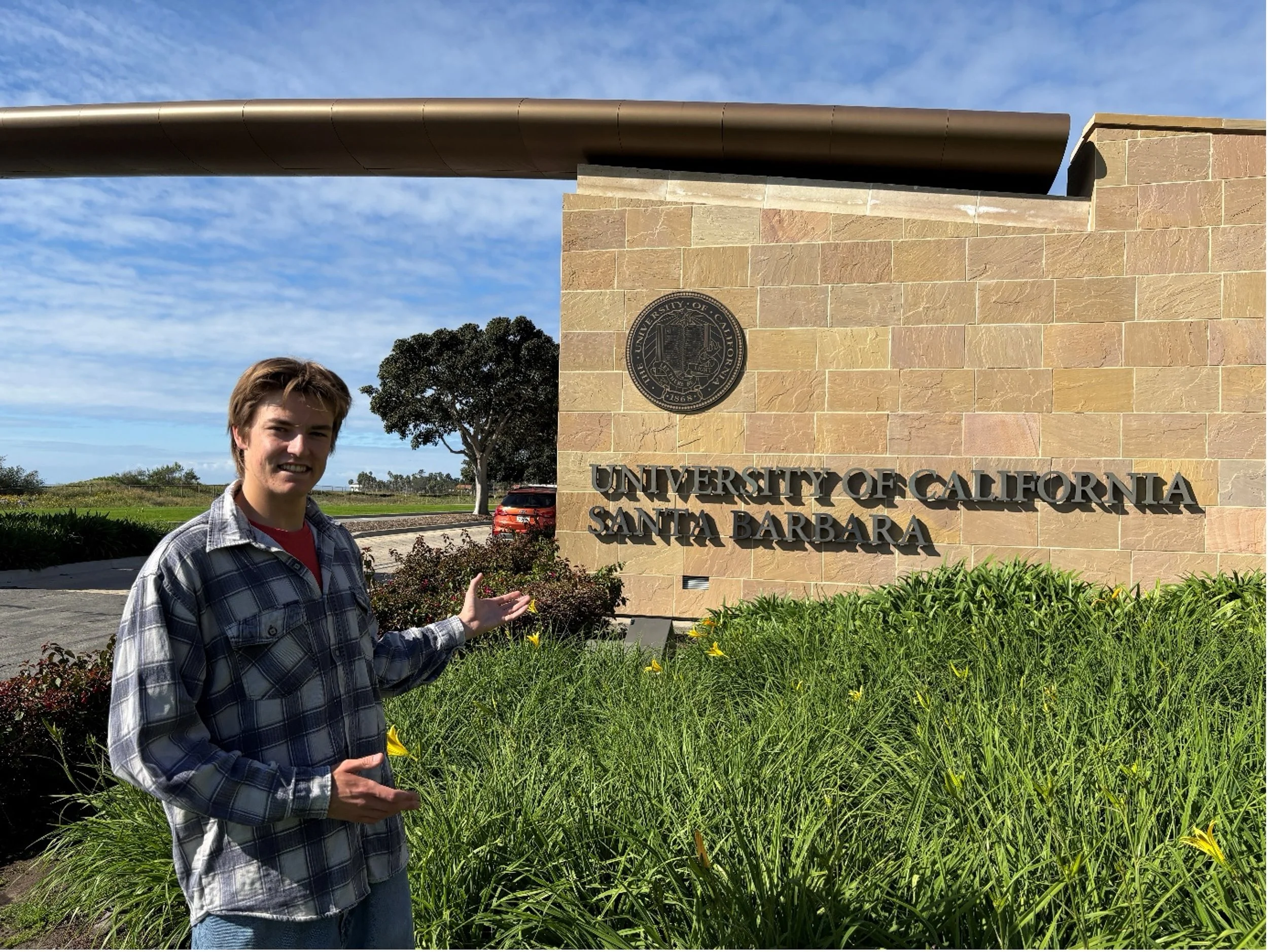
Darius Lowins
Home: MCI – The Entrepreneurial School
Host: University of California, Santa Barbara
Topic: „Biosorption Performance of Activated Waste Wood Carbon, Biochar, and Used Fungus-Substrate Ash: Adsorption, Desorption, and Recyclability under Different Water Contaminants“
The preservation of healthy water bodies is essential for sustaining human life and maintaining global biodiversity. However, pharmaceutical residues and agricultural by-products increasingly enter aquatic systems due to improper disposal practices and insufficient wastewater treatment. These contaminants ultimately pose a risk to drinking water quality and public health.
To address this issue, the implementation of a fourth stage in wastewater treatment processes is becoming increasingly important. This advanced treatment step aims to remove persistent contaminants, including per- and polyfluoroalkyl substances (PFAS), in order to comply with stringent environmental regulations and water quality standards.
Conventional treatment methods, such as membrane filtration and chemical processes, are effective but often associated with high operational and economic costs. In this context, biosorption using low-cost, sustainable materials represents a promising alternative. Biosorbents offer a circular and potentially more cost-efficient solution for removing contaminants from water.
The primary objective of his research project is to evaluate the performance of three biosorbents—activated waste wood carbon, biochar, and used fungus-substrate ash. The study focuses on their adsorption capacity, desorption behavior, and recyclability when exposed to various water contaminants.
This research is conducted at the prestigious Bren School of Environmental Science & Management within the Keller Lab at University of California, Santa Barbara. The lab is internationally recognized for developing economically viable solutions that promote equitable access to safe drinking water, improve biosolids management, and eliminate emerging contaminants such as microplastics and persistent “forever chemicals.”